
Do you ever notice that some things look blurry, stretched, or distorted—sometimes close up, sometimes far away? You might be dealing with astigmatism, a very common eye condition. Don’t worry, it’s not as scary as it sounds, and with the right care, it’s easy to manage. Let’s break it down in simple terms.
What is Astigmatism?
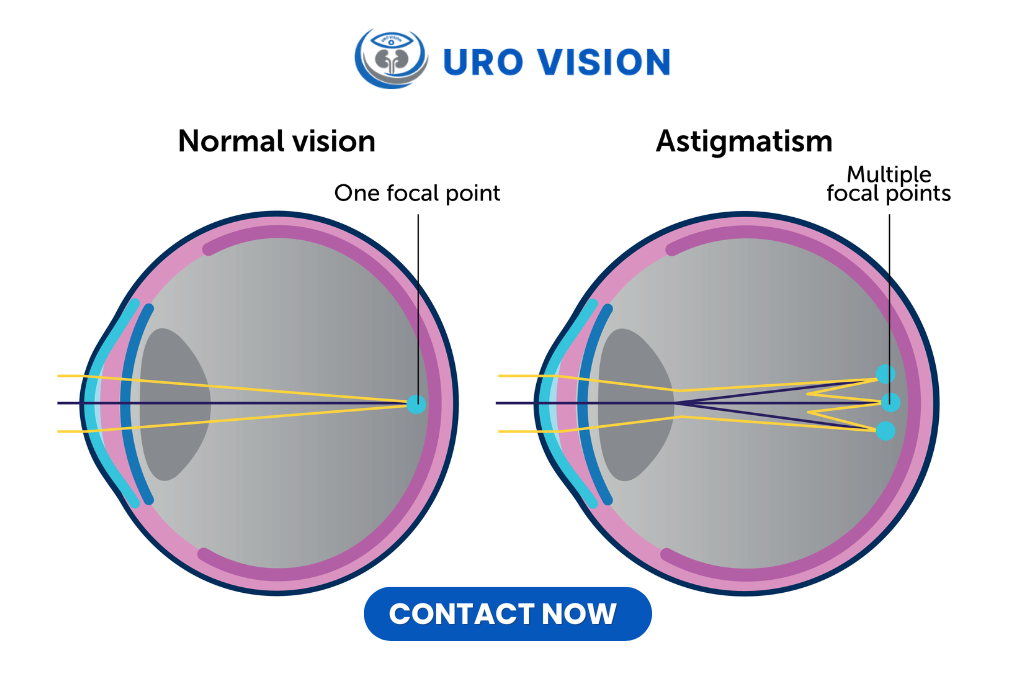
Astigmatism happens when your cornea (the clear front part of your eye) or lens isn’t perfectly round. Instead of being shaped like a basketball, it’s shaped more like a football.
This uneven curve causes light to focus on multiple points in your eye, making vision blurry or distorted.
Signs you might have it:
- Blurry vision at any distance
- Difficulty seeing at night
- Eye strain or headaches
- Squinting often
If any of these sound familiar, you’re not alone—many people have astigmatism and don’t even know it.
Types of Astigmatism
There are a few types, but here’s the simple way to understand them:
- Corneal astigmatism – Caused by an irregularly shaped cornea.
- Lenticular astigmatism – Caused by the lens inside your eye being uneven.
- Regular vs. irregular – Regular is the most common and easier to correct with glasses or contacts. Irregular may require special lenses or treatment.
Most people have mild astigmatism, which often doesn’t stop you from doing daily activities.
Also Read – Why I Stopped Treating Contact Lenses Casually
What Causes Astigmatism?
Astigmatism is usually present from birth, but it can also develop after an eye injury, surgery, or certain eye conditions.
Some risk factors include:
- Family history of astigmatism
- Eye injuries or surgeries
- Certain diseases like keratoconus (rare)
The good news? For most people, it’s simply a matter of correction, not a serious health issue.
How Astigmatism Affects Your Vision
Astigmatism can make your vision blurry, stretched, or wavy. Here’s what it can feel like:
- Close-up tasks like reading a book may seem fuzzy
- Distance vision like seeing road signs can appear distorted
- Headaches or eye strain after long screen time or reading
- Night vision issues like halos or glare around lights
Many people adapt without realizing it, but proper correction makes life a lot easier.
Diagnosing Astigmatism
An eye doctor can easily detect astigmatism with a comprehensive eye exam. Tests may include:
- Visual acuity test – Reading letters on a chart
- Keratometry – Measuring the curve of your cornea
- Refraction test – Determines your prescription for glasses or contacts
If you’ve noticed blurry vision or frequent squinting, it’s time to schedule an eye checkup.
Correcting Astigmatism
The most common and effective ways to correct astigmatism include:
- Glasses – Lenses are specially designed to compensate for the uneven curve.
- Contact lenses – Toric lenses work well for mild to moderate astigmatism.
- Refractive surgery – Options like LASIK can reshape your cornea permanently.
Tip: Even mild astigmatism benefits from correction—it reduces eye strain and improves comfort.
Daily Tips for Managing Astigmatism
Even with correction, you can do simple things to make your eyes feel better:
- Take regular breaks when reading or using screens
- Use good lighting to avoid squinting
- Stay hydrated and blink often to prevent dry eyes
- Wear your prescription consistently—don’t skip glasses or contacts
Small habits go a long way in keeping your eyes comfortable.
Astigmatism and Children
Astigmatism is common in children too. If left uncorrected, it can affect reading, learning, and even cause headaches.
Signs to watch for in kids:
- Squinting frequently
- Sitting too close to screens or books
- Complaining of blurry vision or headaches
Early detection is key—regular eye exams help children develop healthy vision.
FAQ: Astigmatism
Q1: Is astigmatism serious?
Usually not. Most cases are mild and easily corrected with glasses, contacts, or surgery.
Q2: Can astigmatism change over time?
Yes, it can change slightly as you age or after eye surgery, so regular checkups are important.
Q3: Can I still play sports or drive with astigmatism?
Absolutely! Corrective lenses help you see clearly and safely.
Q4: Is astigmatism inherited?
It often runs in families, but not everyone with a parent who has it will develop it.
Q5: Can astigmatism be corrected permanently?
Yes, refractive surgeries like LASIK can permanently reshape your cornea, but glasses and contacts remain effective options too.
When to See an Eye Doctor
See an eye doctor if you notice:
- Blurry or distorted vision
- Frequent headaches or eye strain
- Difficulty seeing at night
- Squinting more than usual
Early diagnosis and correction make daily life easier and prevent long-term strain.
Final Thoughts
Astigmatism is more common than you think—many people live with it without even knowing. The good news? It’s easy to detect, correct, and manage. With proper care, glasses, or contacts, your vision can be clear and comfortable.
Don’t ignore subtle signs like headaches or blurry vision—your eyes deserve attention. After all, sharp, comfortable vision makes everything in life, from reading to gaming, so much more enjoyable.